Appalachian dulcimer
The Appalachian dulcimer is a long, narrow instrument played on the lap, with three or four strings and a sweet, droning sound. It is one of the easiest folk instruments to start on: you can play a tune on your first day.
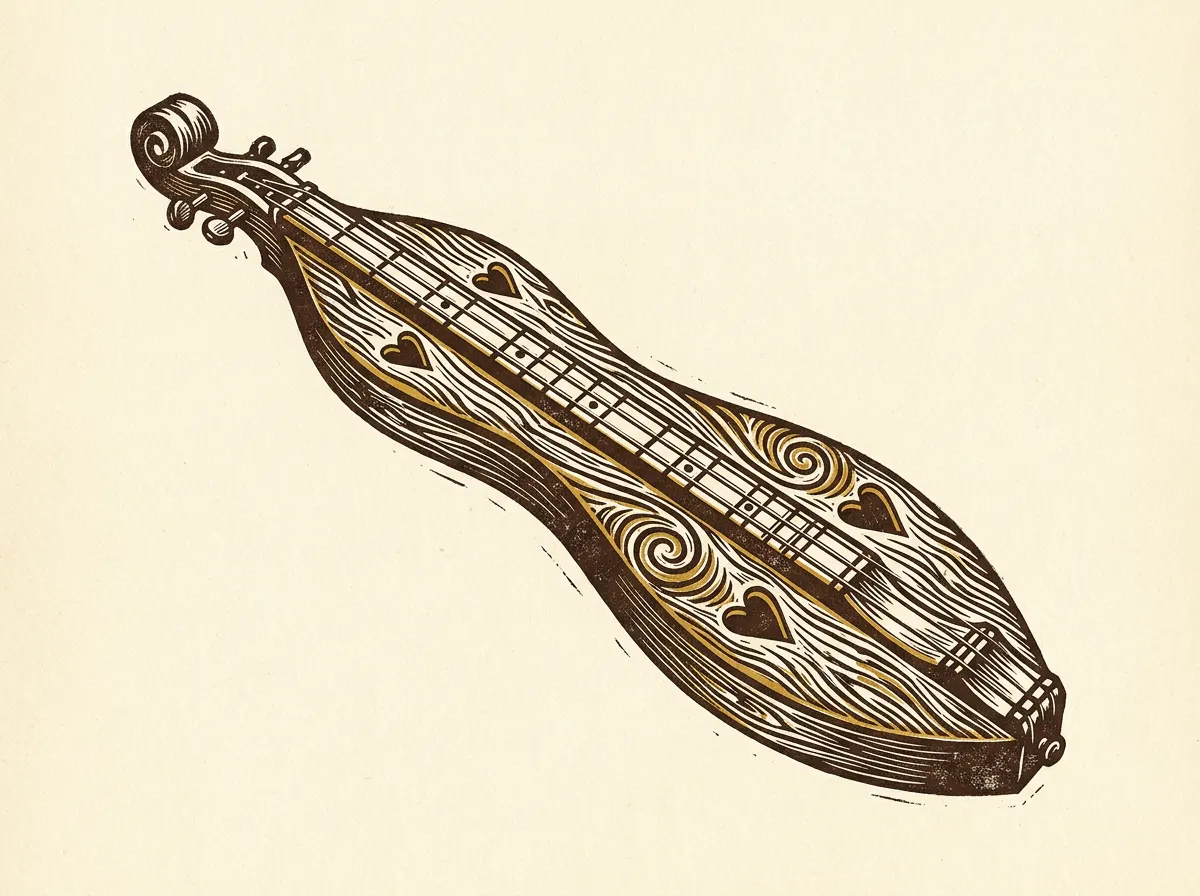
- Also called
- Mountain dulcimer, lap dulcimer
- Family
- Fretted zither
- Strings
- Usually three or four
- Origins
- Early 19th-century Appalachia
- Revival
- Popularised in the 1950s–60s folk revival by Jean Ritchie
History
The dulcimer appeared in the Appalachian Mountains in the early 1800s among Scotch-Irish settlers, although no matching instrument is documented in Ireland, Scotland or northern England. Its likely relatives are European zithers such as the German scheitholt, the Swedish hummel, the Norwegian langeleik and the French épinette des Vosges. Kentucky singer Jean Ritchie brought it to city audiences in New York during the folk revival, and players from Joni Mitchell to Brian Jones of the Rolling Stones later picked it up.
How it is played
- Noter and drone: the traditional way. A small stick (the noter) frets the melody string while the other strings ring as an unchanging drone.
- Chord-melody: the modern way. Fingers fret all the strings to play chords under the tune.
The fretboard is diatonic: like the white keys of a piano, it has no in-between notes. That makes wrong notes rare and folk tunes easy to find.
What to check when buying
- Geared tuners rather than wooden friction pegs make tuning far easier for beginners.
- A "6½ fret": an extra fret found on most modern dulcimers, useful for many tunes.
- Comfortable string spacing and low action, especially if you plan to play chords.
First steps
- Lay the dulcimer across your lap with the tuning pegs to your left.
- Tune to D-A-A (bass to melody), a traditional beginner tuning, or D-A-d for chord playing.
- Strum all strings with a pick while fretting only the melody string, and find a simple tune by ear. The Water Is Wide and Shenandoah work well.
More instruments: mouth bow · tin whistle · all guides