Instrument guide
Tin whistle for beginners
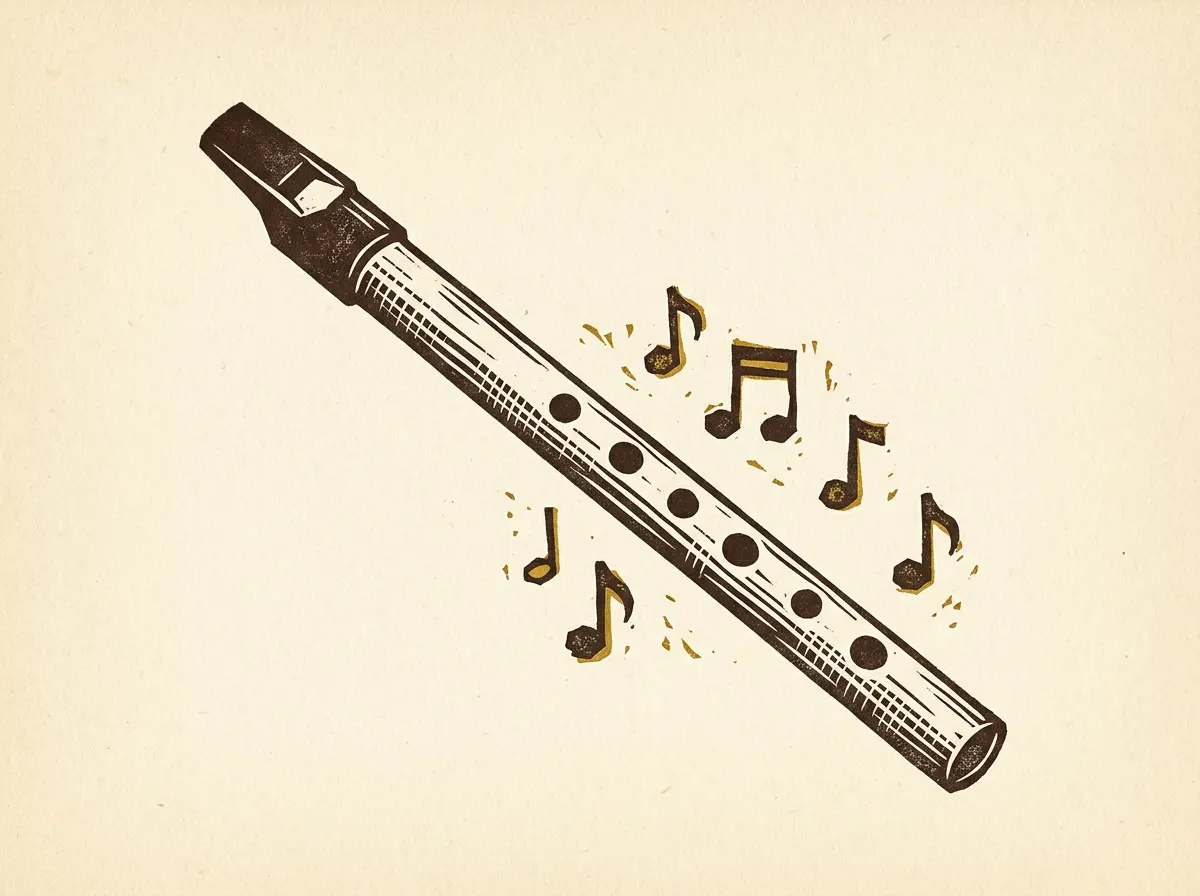
The tin whistle is a simple six-holed pipe and the most popular instrument in Irish traditional music today. It is cheap, small enough for a pocket, and you can play a recognisable tune within an hour.
- Also called
- Penny whistle, Irish whistle
- Family
- Fipple flute, like the recorder
- Holes
- Six
- Range
- About two octaves
- Start with
- A whistle in D, the standard key for Irish and Scottish music
History
Factory-made whistles began in the 1840s, when Robert Clarke of Manchester produced them between 1840 and 1889. They were so cheap they were sold for a penny, which gave the instrument its other name and made it as common in households as the harmonica.
Which whistle to buy
- Key of D. Most session tunes are in D or G, and nearly all tutor books assume a D whistle.
- Brass or nickel body with a plastic mouthpiece is the common, inexpensive design and perfectly good for learning.
- Try before you settle. Whistles vary in how much breath they need; a reasonably quiet, easy-blowing one is kindest to beginners and their neighbours.
- Low whistle later. Larger, deeper "low whistles" are lovely but need bigger finger stretches.
How to play: first steps
- Hold the whistle with your left hand covering the top three holes and your right hand the bottom three.
- Blow gently. Covering all six holes on a D whistle gives a low D; lifting fingers one at a time from the bottom walks you up the scale.
- Blow a little harder to jump to the second octave with the same fingering.
- Learn a slow air first. The Water Is Wide and Danny Boy suit the whistle well.
Ornaments
Irish whistle style is decorated with cuts, strikes and rolls: tiny, quick finger movements that give a note an accent or a ripple. Learn them only after you can play a tune cleanly; they come naturally with listening.
More instruments: jaw harp · Appalachian dulcimer · all guides