Banjo for beginners
The banjo carries a long and complicated history, from instruments made by enslaved Africans in the Americas to the driving sound of bluegrass. This guide explains the types, how to choose your first one, and how to start playing.
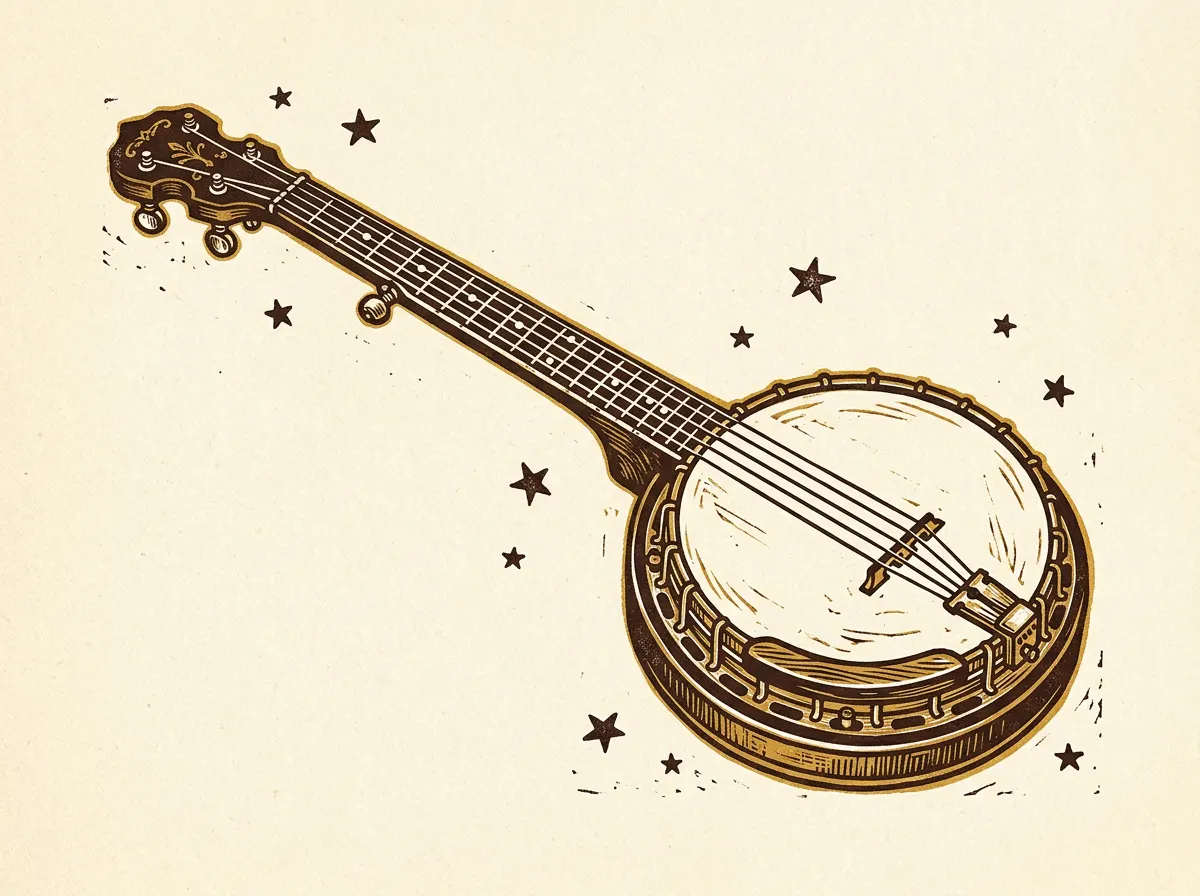
- Strings
- Usually five (with a short drone string) or four
- Standard tuning
- Open G: gDGBD on five-string banjo
- Main styles
- Clawhammer (old-time) and three-finger Scruggs style (bluegrass)
- Heard in
- Old-time, bluegrass, folk; tenor banjo in Irish music
A short history
Early banjos were made by African Americans from gourds and animal skins, drawing on instruments from West and Central Africa. In the 1830s and 1840s white performers popularised the five-string banjo through minstrel shows, a history that long kept it from respectability. After the Second World War, the folk revival and bluegrass gave it a new life.
Which banjo?
| Type | Sound | Best for |
|---|---|---|
| Five-string, open-back | Mellow, lighter to hold | Old-time and clawhammer |
| Five-string, resonator | Loud and bright, projects forward | Bluegrass and Scruggs style |
| Four-string tenor | Crisp, played with a pick | Irish traditional music, early jazz |
The five-string's short fifth string starts at the fifth fret and rings as a drone, which gives the banjo its distinctive sound. Tenor banjos are tuned in fifths; many Irish players tune them GDAE, an octave below the fiddle.
What to check when buying
- Decide the style first. Open-back for old-time, resonator for bluegrass, tenor for Irish sessions.
- Low, even action. Strings should sit close to the fingerboard without buzzing; high action makes learning painful.
- Geared tuners, including on the fifth string, so the banjo stays in tune.
- A tight head. The drum head should be evenly tensioned; a slack head sounds dull.
- A proper setup. Buying from a shop that sets up instruments is worth more than any single feature.
First steps
- Tune to open G (gDGBD) with a clip-on tuner. Strumming the open strings gives a G chord.
- Learn the three chords G, C and D7. They cover hundreds of songs.
- Pick a style: clawhammer (a downward strike with the back of a fingernail and the thumb on the drone string) or three-finger picking with fingerpicks.
- Play along with a slow tune such as Man of Constant Sorrow or Old Joe Clark.
More instruments: mandolin · fiddle · all guides