Instrument guide
Mandolin for beginners
The mandolin is a small, bright instrument with eight strings in four pairs. It came from Italy, became the voice of bluegrass, and is a favourite in Irish sessions. If you already know the fiddle, you already know its tuning.
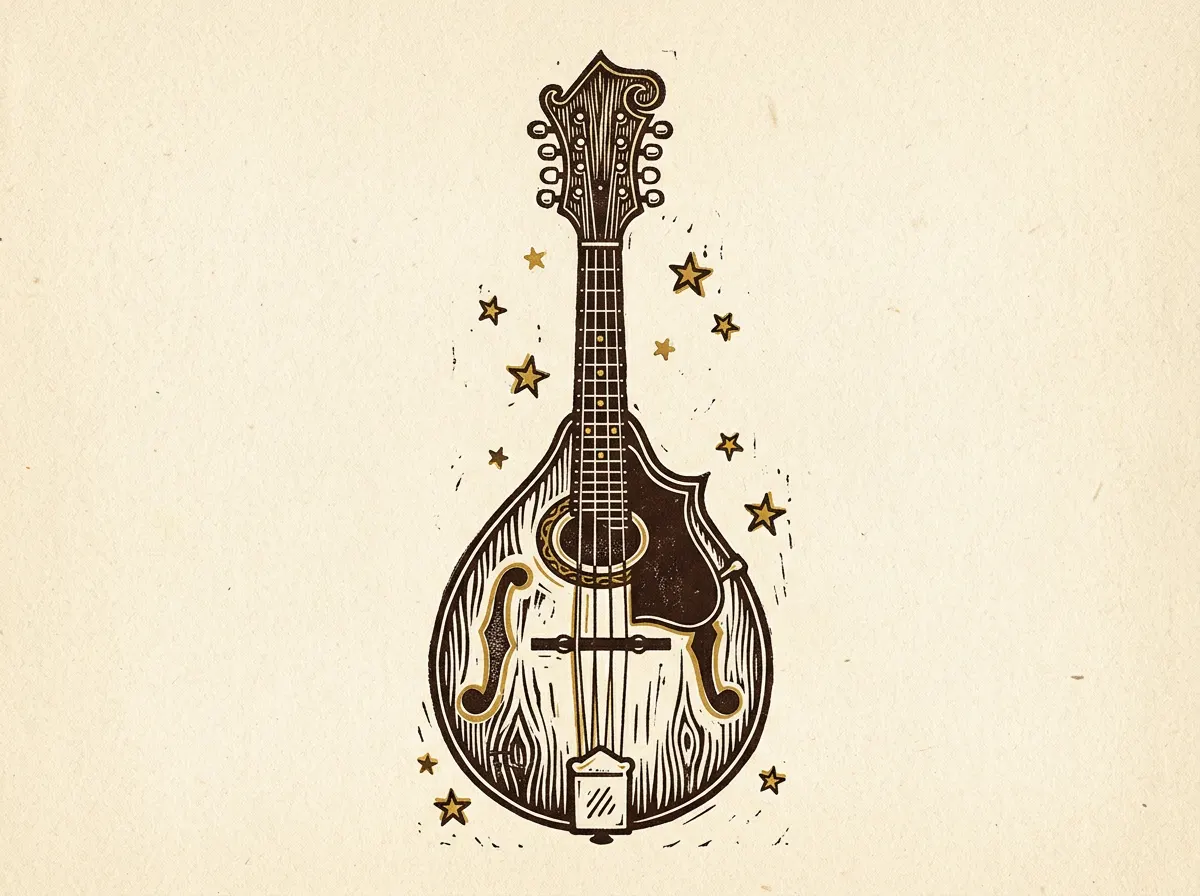
- Strings
- Eight, in four pairs (courses) tuned in unison
- Tuning
- G D A E, the same as the violin
- Origins
- Italy, mid-18th century, developed from the mandolino
- Heard in
- Bluegrass, Irish and British folk, Brazilian choro, classical
Which mandolin?
| Type | Build | Best for |
|---|---|---|
| A-style archtop | Carved top, teardrop shape | Bluegrass and folk on a budget; easy to hold |
| F-style archtop | Carved top with decorative scroll | The classic bluegrass look; same sound family as A-style, usually costs more |
| Flat-back | Flat top and back, braced inside | Irish, British and Brazilian folk |
| Neapolitan (bowl-back) | Deep rounded back | Classical and Italian music |
For a first instrument, an A-style or flat-back is the practical choice: the F-style scroll adds cost, not playability.
How it sounds
Mandolin notes fade quickly, which is why players use tremolo, picking a pair of strings rapidly to sustain a note. In bluegrass the mandolin also plays the "chop", a short, damped off-beat chord that acts like a snare drum.
What to check when buying
- Playable action: paired strings are hard to press, so low action matters even more than on guitar.
- Intonation: a note at the 12th fret should match the open string an octave higher.
- Stable tuners: eight strings mean eight chances to drift out of tune.
- Setup: a good shop setup makes a modest mandolin play like a better one.
First steps
- Tune each pair to G, D, A and E with a clip-on tuner.
- Learn the G, C and D chord shapes, then the chop on the off-beat.
- Play simple melodies: fiddle tunes transfer directly because the tuning is the same. Try Old Joe Clark.
More instruments: fiddle · banjo · all guides